
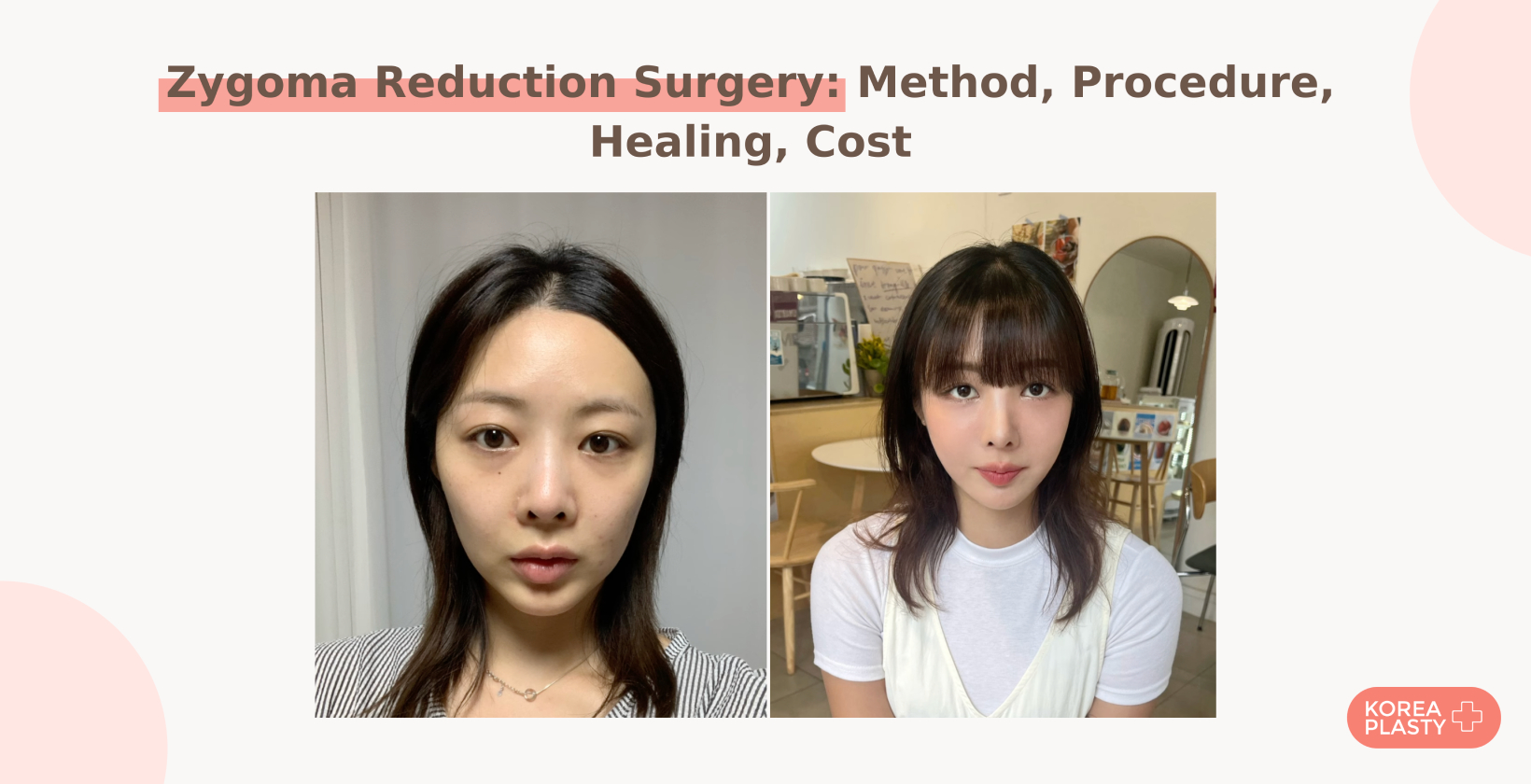
Zygoma Reduction Surgery: Method, Procedure, Healing, Cost
Cheekbone reduction, known as zygomatic reduction, is a surgical procedure to reduce the bone structure of the mid-face. It reshapes the zygomatic arch while the cheekbone is fixed to the facial frame with titanium screws and small plates. The operation takes 2 to 3 hours and uses an L-patterned or M-patterned osteotomy, delivered through an intraoral incision.
Performed under general anesthesia, the surgery has a recovery period of 1 to 2 weeks for social return and about three weeks for full healing. After mobilising the bone, surgeons close incisions with stitches.
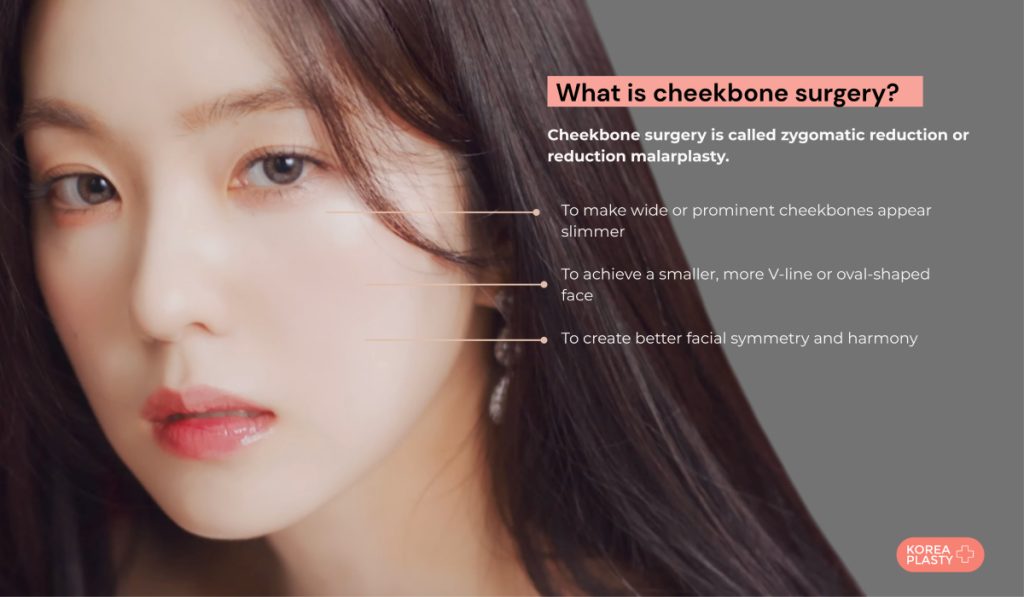
What is cheekbone surgery?
Cheekbone surgery is called zygomatic reduction or reduction malarplasty. Cheekbone implants (malar augmentation) can be inserted as a part of a facial cosmetic surgery plan, and oral and maxillofacial surgeons are trained in facial cosmetic procedures, including cheekbone implants.
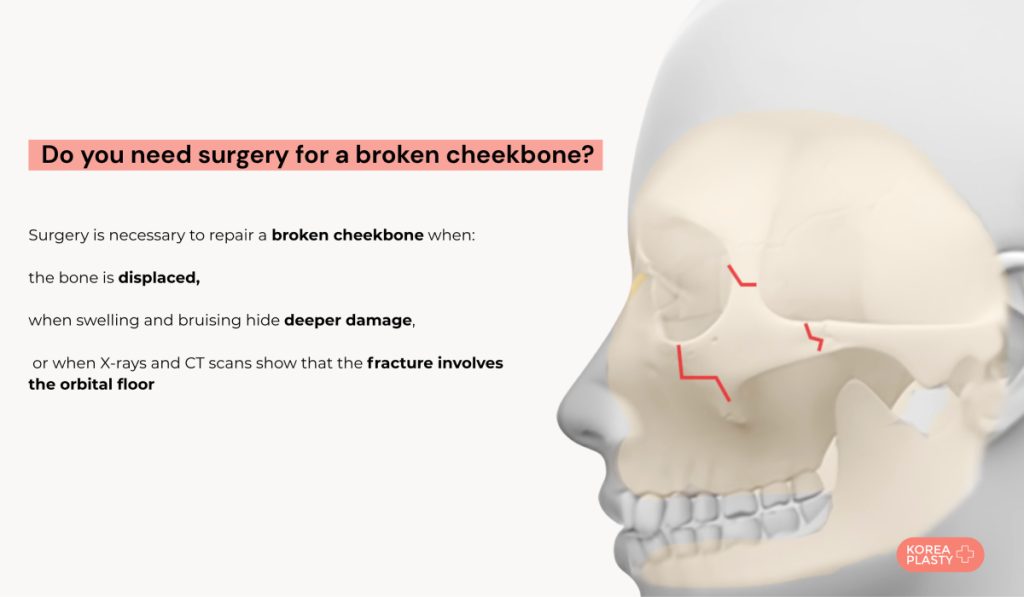
Do you need surgery for a broken cheekbone?
Not every broken cheekbone needs an operation. No surgery is recommended for a stable cheekbone fracture. If the fragments do not move, ice, pain medication, and rest are sufficient. Mild fractures heal without surgery. Surgery is necessary to repair a broken cheekbone when the bone is displaced, when swelling and bruising hide deeper damage, or when X-rays and CT scans show that the fracture involves the orbital floor. Severe impact pushes the cheekbone downward, distorts facial appearance, blocks nasal airways, or limits jaw movement. In these situations, cheekbone fracture requires surgical intervention. Fractures with multiple broken bones need facial reconstructive surgery to restore both function and appearance of the injured bones. Stable wiring or small metal plates and screws inserted through concealed incisions inside the mouth or along the lower eyelid hold the cheekbone in the correct position while it heals. A tripod fracture is a facial fracture that involves the zygoma which is displaced and usually needs open reduction and fixation. Blowout fracture requires careful inspection and restoration of the orbital floor so the eye can move normally. Board-certified plastic surgeons rebuild the cheekbone in an outpatient surgery center or hospital and then monitor the patient for pain, swelling, and infection after the procedure.
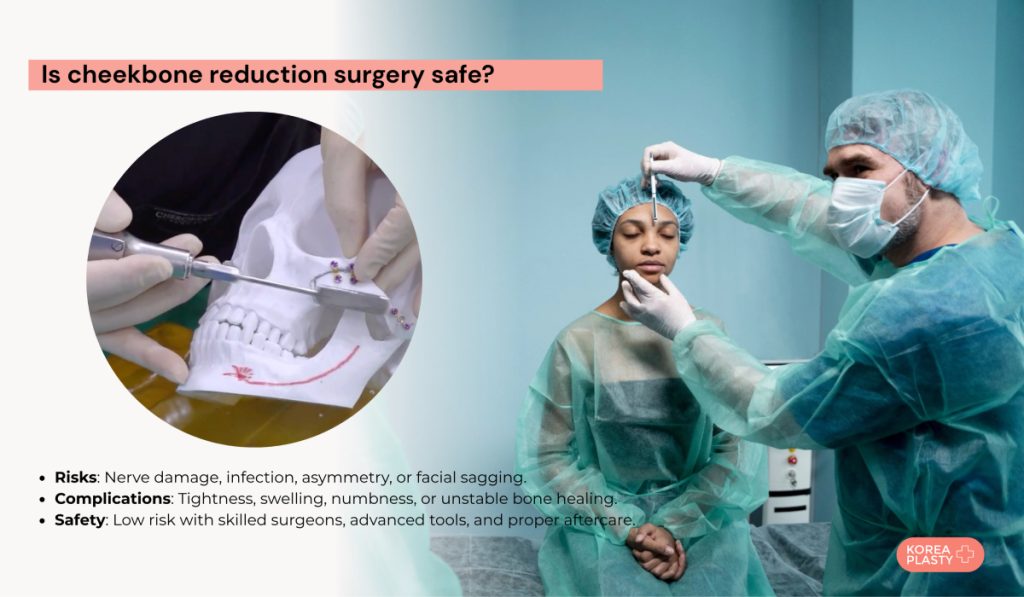
Is cheekbone reduction surgery safe?
Cheekbone reduction is generally deemed to be a safe procedure, yet it carries risk. Cheekbone reduction surgery carries substantial risks including nerve damage, bone malunion, infection, numbness, and asymmetry. There is always a risk of sagging after any type of cheekbone reduction, especially for patients in their thirties to forties. Possible complications include instability of the zygomatic arch, tightness when opening the mouth, prolonged swelling, and loss of sensation in the mid-face area. Revision surgery is required if the design of the bone excision is wrong or if healing is difficult.
Cheekbone reduction performed by a highly experienced surgeon is safe, and modern machinery together with advanced support equipment determines the exact cheekbone ratio, limiting risks and potential complications. Sterile operating rooms, antibiotics, and mouthwash reduce infection risk, while postoperative follow-up appointments monitor bone stability, nerve function, and long-term results. Patients begin with a consultation with a board-certified plastic surgeon who fully informs them of any risks, possible complications, and physiological concerns.
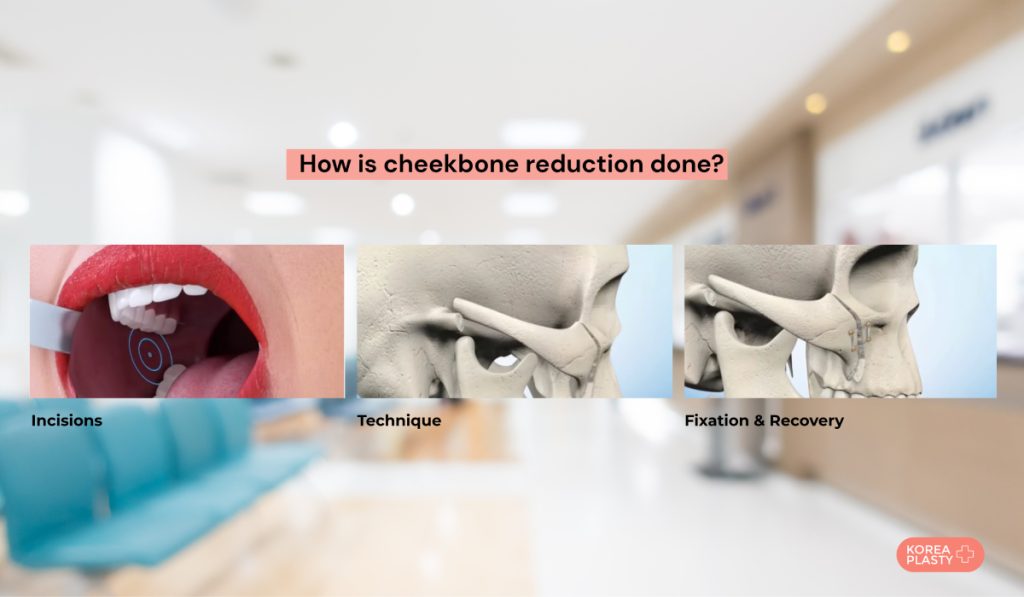
How is cheekbone reduction done?
Cheekbone reduction is performed through two small incisions inside the mouth and, when needed, two additional small incisions on the sideburn skin. All cuts are concealed inside the lip or within the hairline so there is no visible scarring. After the soft tissues are gently raised, the surgeon performs an L-patterned osteotomy. An L-patterned cut is made in the cheekbone to move it medially, removing 1-2 mm (0.04-0.08 in) of the protruding outer part. Osteotomy cuts allow the entire zygomatic body and arch to be mobilised and rotated inward, narrowing the face. The reduced bone is then reattached with titanium screws and plates to keep the cheekbone in its new, more delicate position. The procedure is carried out under general anaesthetic or conscious sedation with local anaesthesia, guaranteeing no pain during surgery, and is usually completed as a day-case or single-night hospital stay.
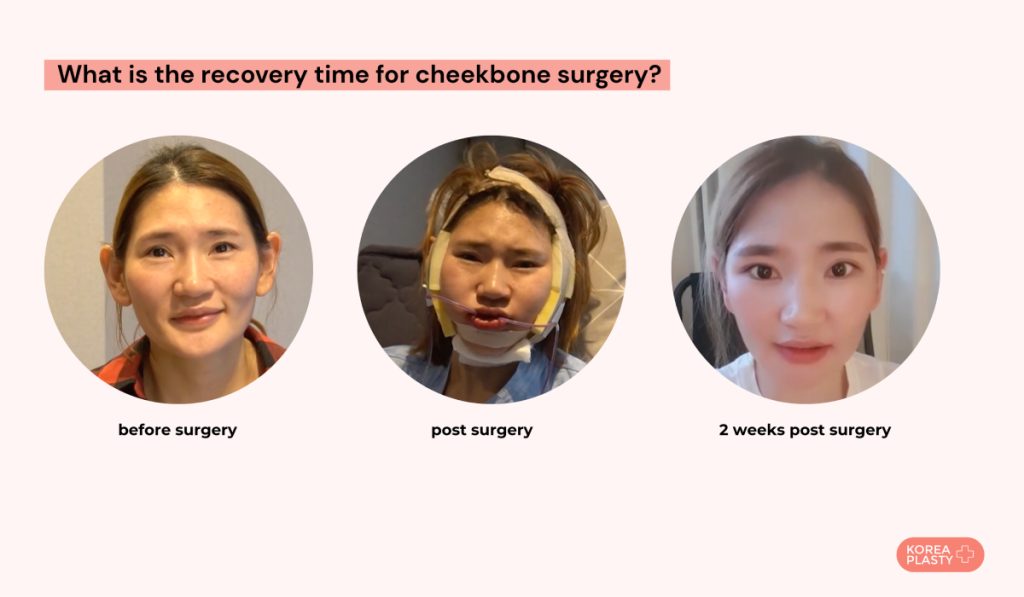
What is the recovery time for cheekbone surgery?
Recovery for cheekbone reduction surgery takes two to seven days for initial healing and six weeks for the bone to mend completely. Bruising and swelling are most noticeable in the first forty-eight hours, then fade over the following week. Most patients return to work and light daily activities within one to two weeks. A soft diet is recommended for at least six weeks to protect the healing bone and limit chewing. Strenuous exercise, heavy lifting, contact sports, and sleeping on the operated side must be avoided for six weeks. You must also avoid blowing your nose until the cheekbone has fully healed. Swelling persists for up to three months and takes twelve months to disappear entirely.
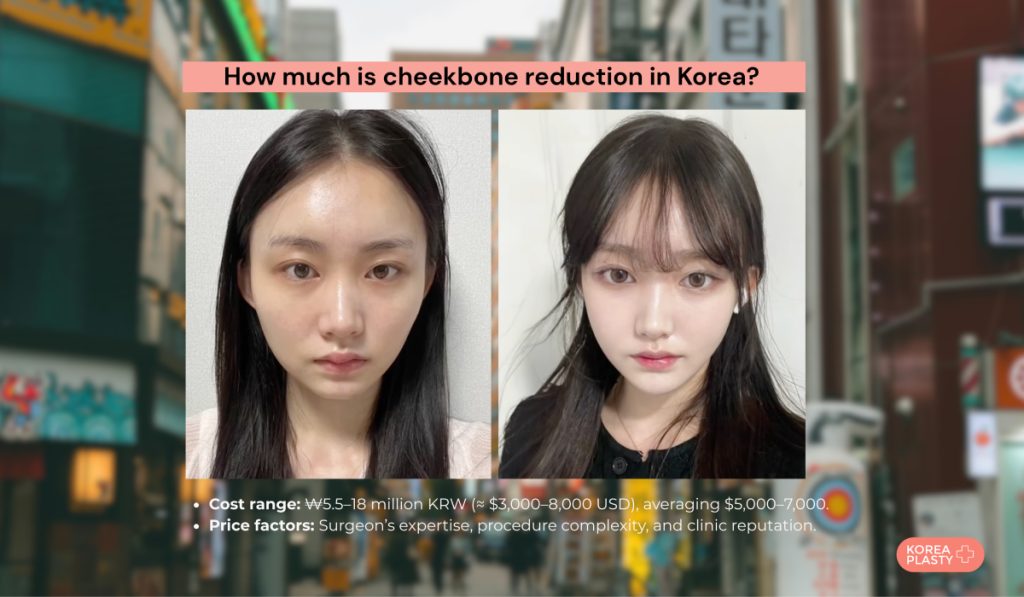
How much is cheekbone reduction in Korea?
Cheekbone reduction in South Korea typically ranges from approximately 5,500,000 KRW to 18,000,000 KRW. In the United-States currency, cheekbone reduction cost in South Korea generally ranges from $3,000 to $8,000 USD. Cheekbone reduction cost $5,000-7,000 on average. Cheekbone reduction surgery price ranges from $3,500 to $6,100 at lower-fee facilities, while simpler cases are listed from $3,200. Cost varies depending on the surgeon’s experience with facial contouring, complexity of the bone reshaping, and clinic’s reputation. International patients choose South Korea for cheekbone reduction due to competitive pricing and experienced surgeons. The fee is about 70% less than in the United States, where the average cost is $16,000.