
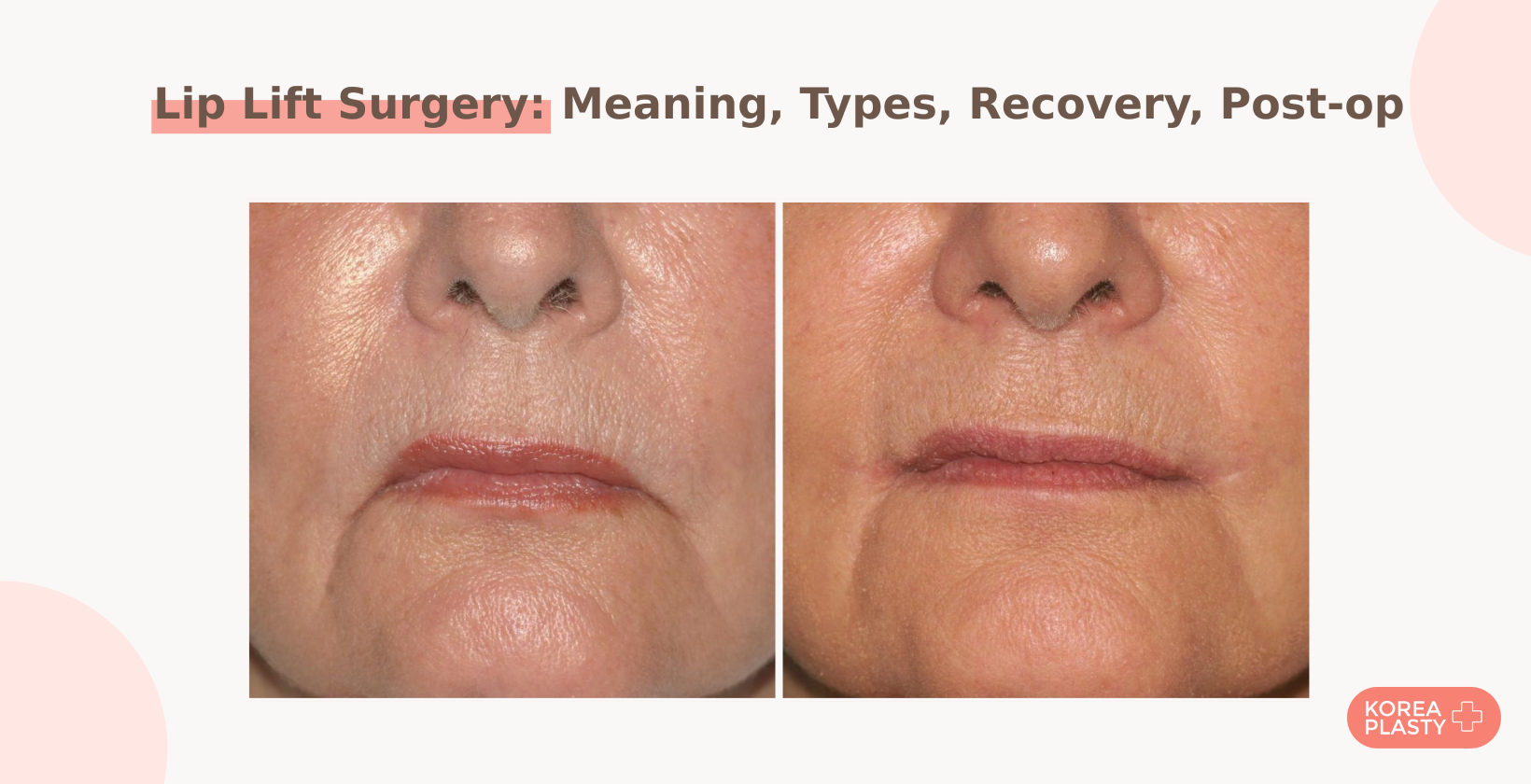
Lip Lift Surgery: Meaning, Types, Recovery, Post-op
A lip lift is a type of lip reshaping facial plastic surgery that shortens the distance between the nose and the upper lip.
The surgical lip lift is a procedure that remodels the philtrum, exposing more vermilion and creating fuller, youthful contours.
Post procedural care after a lip lift includes daily gentle cleansing of the lips, the use of an ice pack to reduce swelling, and a soft diet for a week while the sore area improves.
Patients sleep with the head raised, apply a warm compress at 30 minutes on, then 30 minutes off, and attend follow up appointments after two weeks to check scar healing. A lip lift recovery allows patients to return to normal activities within a week.
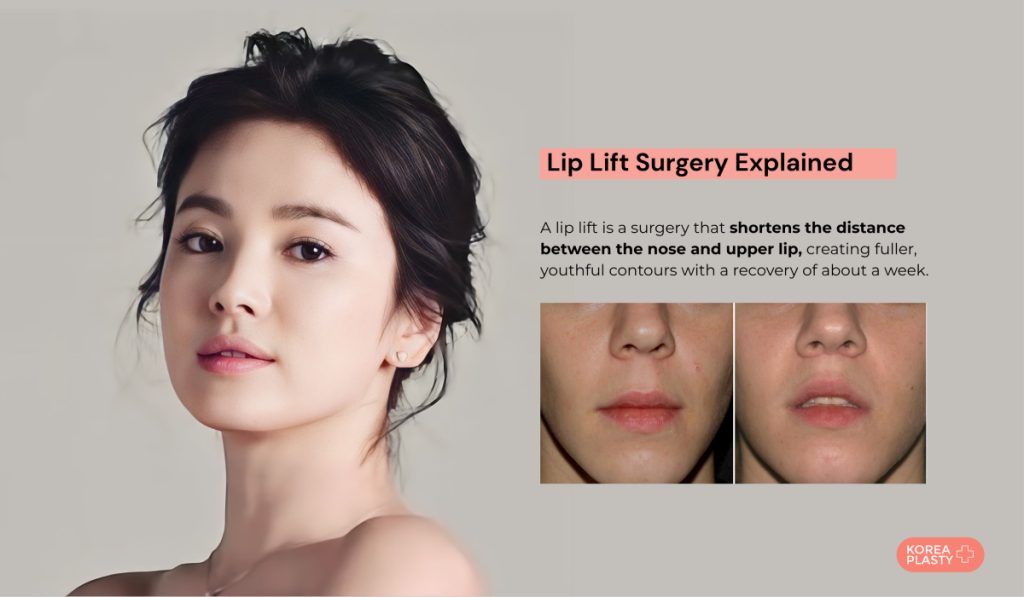
What is lip lift surgery?
A lip lift is a surgical procedure to lessen the space between the bottom of your nose and the top of your lip, which increases the lips’ vermilion border by shortening the space between the upper lip and the nose. A lip lift is a type of lip reshaping facial plastic surgery and a lip enhancement procedure. Bullhorn lip lift is performed by removing a horizontal crescent of skin just under the nose.
The surgeon removes a small portion of skin, lifting the position of the upper lip, revealing more of the pink vermilion and showing more upper teeth when smiling. The technique involves a small incision at the base of the nose; the surgeon removes a thin sliver of skin, then lifts and secures the upper lip in its new position. Because tissue is excised, the change is a permanent enhancement.
The operation is typically an outpatient procedure, performed under local or general anesthesia, and is relatively low-risk when performed by a trained, board-certified, and highly experienced reconstructive plastic surgeon. Ideal candidates have a long upper-lip length, do not display a gummy smile, and wish to ameliorate thinning, drooping, or poorly defined lips. Beyond making the lips appear larger and the mouth more youthful, the lift can refine the cupid’s bow, refine smoker’s lines, and balance overall facial proportions.
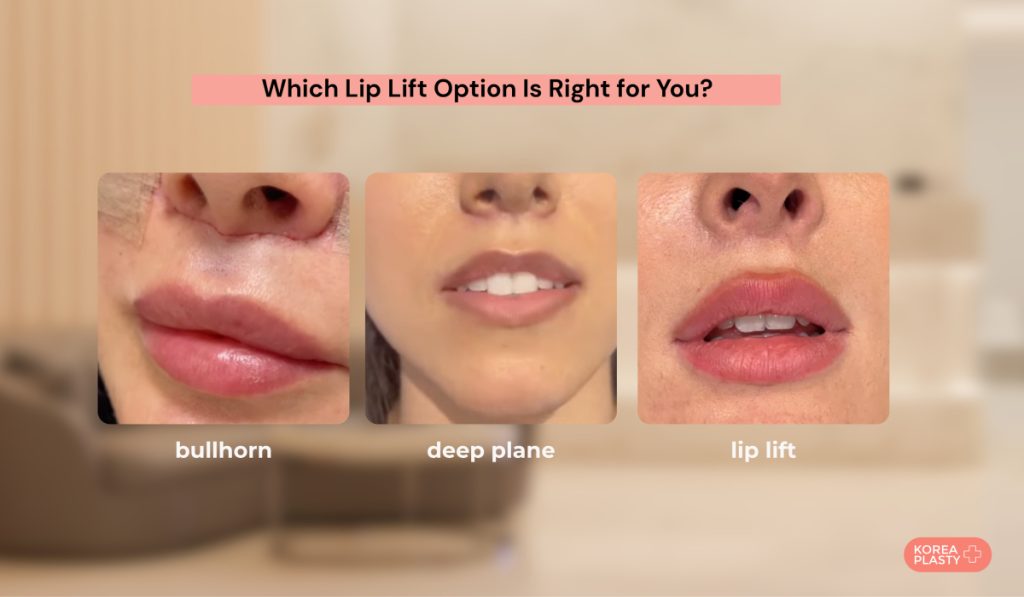
What are lip lift options?
The lip lift options are presented below.
- Bullhorn lip lift is a good option for people who want to add height instead of volume to their lips.
- Lip lift is an excellent option for individuals experiencing elongation of the upper lip due to aging.
- Lip lift may be a great option for people with thin lips and a long or drooping upper lip, who want a more defined lip border, who want to reduce space between the lips and the nose.
- Deep Plane or V to Y Lip Lift is an advanced technique sometimes used for more dramatic reshaping.
- Lip lift may be a good option for people with downturned corners.
- Direct lip lift (gullwing lift) makes an incision along the border of the upper lip in the shape of a flying seagull.
- Lip lift can be combined with lip fillers.
- Italian lip lift uses two small incisions under the nostrils.
There are five common types of lip lift procedures, each selected according to the patient’s anatomy and goal. The bullhorn lip lift, also called the subnasal or indirect lip lift, remains the most common technique; an incision formed like a bullhorn is placed in the crease beneath the nostrils, skin is removed, and the upper lip is lifted closer to the nose, giving more height instead of volume while enhancing asymmetries. The central lip lift focuses only on the middle third of the upper lip, increasing the cupid’s bow through a minimal incision. The corner lip lift, sometimes called a grin lift, removes tiny triangles of skin at the oral commissures to create a softer, happier appearance in patients with downturned corners. All variations are performed under local anesthesia, are paired with fillers, Botox , laser resurfacing, or facelift, and provide a permanent form of cosmetic surgery for people who will not accept repeated filler sessions or who experience elongation of the upper lip due to aging.
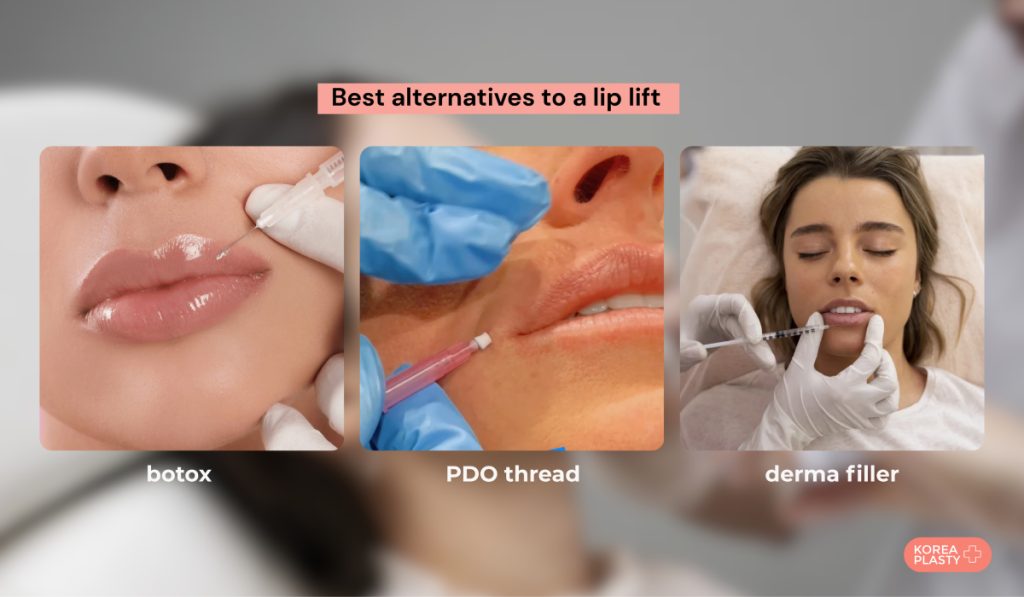
What is a lip lift alternative?
A lip lift alternative is any technique that shortens the apparent distance between the nose and the upper lip without formal surgical excision. Dermal fillers injected along the lip border create a nonsurgical lip lift; the outcome is never as profound as a surgical lip lift, yet they add volume, smooth lip lines, and require minimal downtime. A Botox lip flip is another subtle alternative: the provider injects BOTOX above the lip so that the orbicularis oris muscle relaxes and the upper lip gently rolls outward, giving a fuller appearance without modifying volume. PDO threads allow a minimally invasive PDO lip lift that substitutes for more involved surgical lip lift operations, while CO laser resurfacing shrinks skin and shortens the length of the philtrum, rejuvenating texture with five-to-seven-day downtime. Corner lip lift with Botox, Dysport, or Daxxify is performed without surgery; it targets muscles to uplift the corners of the mouth, transforms a frown into a more cheerful expression, and requires no anesthesia or extended recovery. These nonsurgical techniques enhance lip volume and contour without visible scarring, yet results vary in longevity and are less permanent than a surgical lip lift.
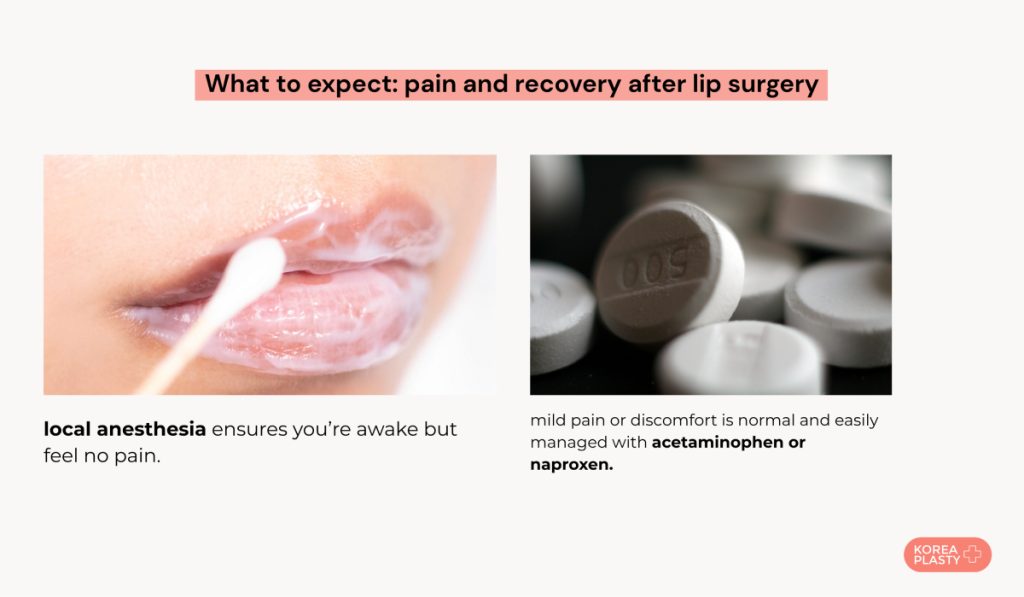
Does lip surgery hurt?
During the procedure you won’t feel any pain. Local anesthesia numbs the area; with local anesthesia you’re awake but won’t feel any pain or discomfort. After the procedure some pain and discomfort will be felt as it begins to heal. Pain after lip lift surgery is usually not severe and is controlled with over-the-counter painkillers: acetaminophen or naproxen. Lip reduction causes discomfort or pain, yet pain after lip reduction is usually not severe and is controlled with acetaminophen or naproxen. Lip augmentation patients report minimal pain during and after procedures; most patients describe the sensation as mild pressure or a brief pinch. Lip filler injections are minimally painful with proper numbing; topical anesthetic numbs lips in about 15 to 30 minutes and lidocaine in the filler helps minimize pain during and after the treatment. After the procedure you will experience slight swelling or bruising around your lips and discomfort will go away after a few days.
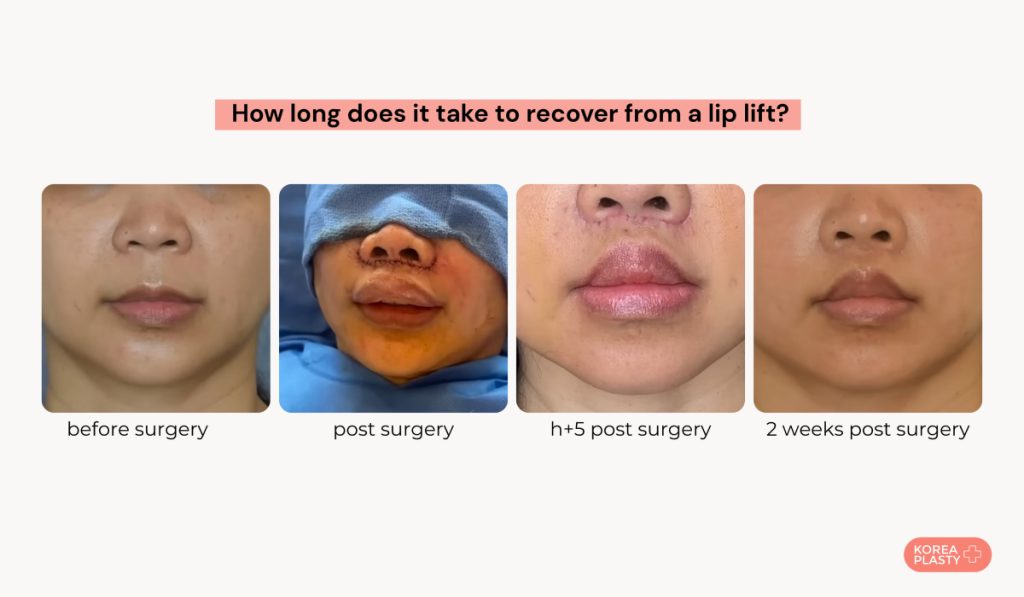
What is the healing time for lip surgery?
Upper lip repositioning recovery takes 1-2 weeks; most swelling subsides within the first week, yet the most major swelling will occur during your first 48 hours after lip lift surgery. Swelling disappears within 1-2 weeks, but final swelling and firmness resolve after fourteen days, and it takes a few months for the swelling to resolve completely.
After lip reduction surgery, most healing, including swelling and bruising, resolves within 2-3 weeks; discomfort and bruising take a few days to go away. Patients can return to usual activities one week after lip reduction, and stitches will dissolve within about a week.
Two months after surgery, most swelling and bruising from a lip lift will have faded, while subtle changes continue as lips settle into their new shape.
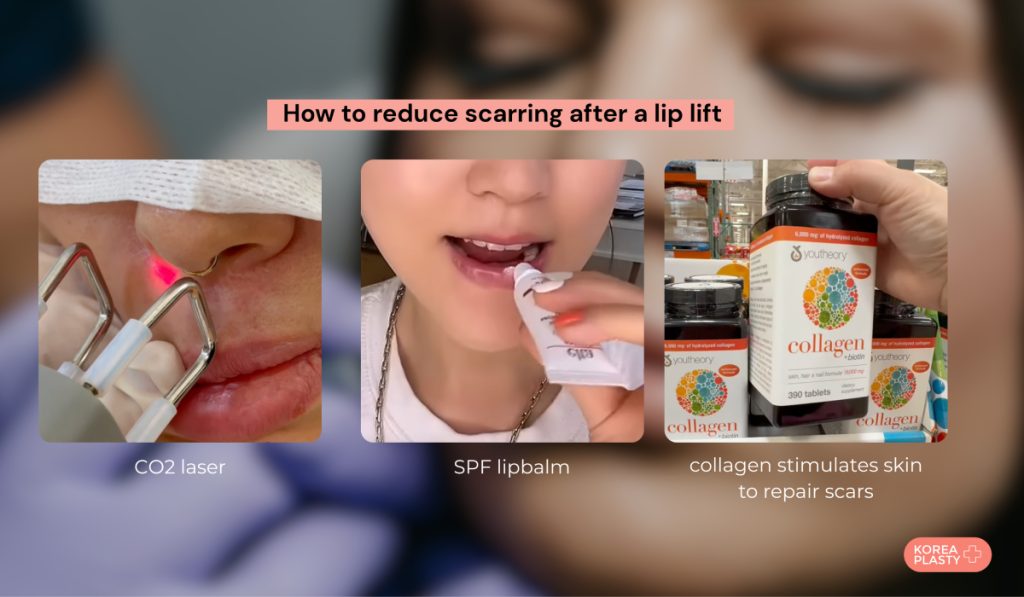
How to minimize scar after lip corner lift?
To minimize scar after lip corner lift, follow the steps explained below.
- Apply silicone gel to lip lift incision site and soften scar over time
- Use fractional CO2 lasers for lip lift scars
- Use erbium lasers for lip lift scars
- Perform CML as rotation flap using extended incision through oral commissure
- Keep scar hydrated and protected
- Protect lip lift incision from sun exposure
- Use laser treatment to reduce risk of hypertrophic scar formation
- Be mindful of lip movements during healing process
- Use Steri-Strips to reduce postoperative scar
- Stimulate collagen production to reduce scar appearance
- Reduce chances of complications by working with experienced plastic surgeon
- Avoid sun exposure before and after procedure
- Use concealer to camouflage scar
- Discuss scar management after one month
- Perform microneedling to manage scarring
Scar problems are reduced when the corner mouth lift is performed as a rotation flap using an extended incision through the oral commissure, because incisions placed precisely at the natural creases at the corners of the mouth leave a resultant scar situated in the vermilion border and commissure, resulting in a considerably minimized visible scar. Following the surgeon’s cleaning and dressing instructions carefully supports optimal scar formation; proper daily wound care is vital in the early stages of healing and helps scars mature more predictably. Patients return to the office after one month to check healing and to discuss scar management; a third follow-up visit is required 6-12 months out to check scar healing.
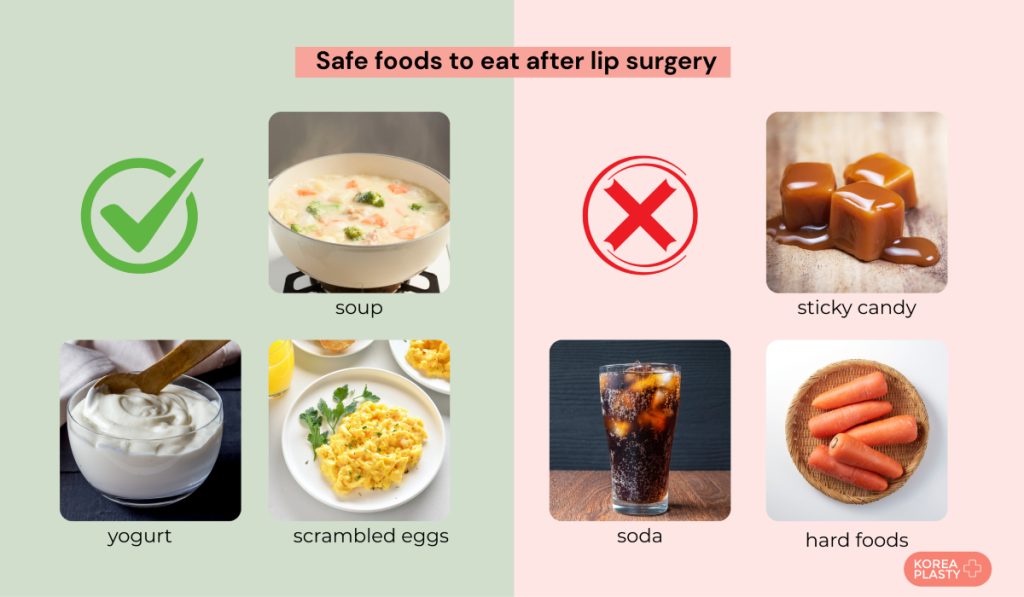
What can you eat after lip surgery?
During the first days, choose cold soft foods that do not require chewing: blended or broth based soups, applesauce, yogurt, smoothies, and chilled milkshakes soothe inflamed tissue and reduce discomfort. Scrambled eggs, mashed potatoes, cottage cheese, soft cooked pasta, macaroni and cheese are also easy to swallow and give gentle protein that helps promote healing. Soft fruits: peaches, ground meats, and fresh vegetables cooked until soft add variety without irritating the surgical site.
Straws must be avoided after oral surgery, so sip directly from a cup. Drink water throughout the day to stay hydrated. Acidic foods, spicy foods, salty foods, carbonated beverages, very hot or very cold foods, and any hard, crunchy, chewy, or sticky foods disrupt recovery. Most patients are able to resume their normal diet about a week after oral surgery; until then, keep meals lukewarm and soft to let the lift heal comfortably.
How long does lip surgery last?
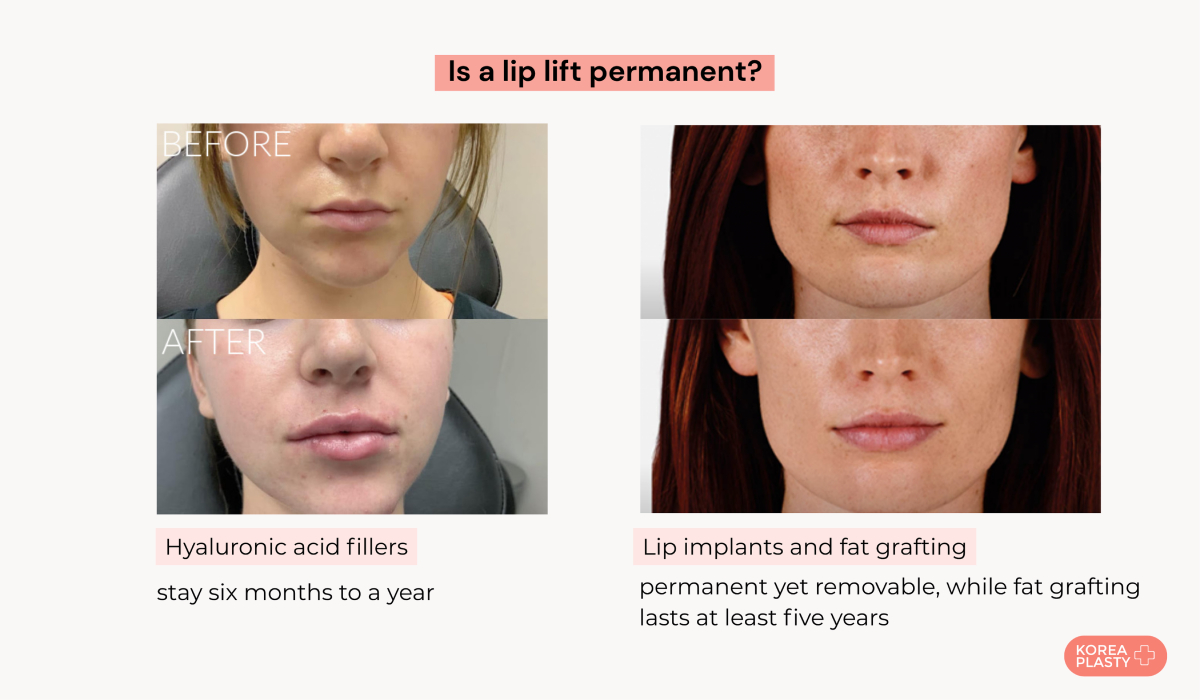
How long lip surgery lasts depends on the chosen technique. Hyaluronic acid fillers are temporary: results stay six months to a year and the injection itself takes only 10-30 minutes. Lip implants and fat grafting deliver longer change; implants are permanent yet removable, while fat grafting lasts at least five years and the procedure takes 60-90 minutes. A lip lift is permanent and lasts many years or even a lifetime, though natural aging will later alter the appearance; the surgery takes 1-2 hours.
What is the cost of a lip lift in Korea?
Lip lift cost in South Korea ranges from $1,700 to $2,500. Accredited plastic surgeons caution that the price of operation changes after personal examination.
Where can I get a lip lift in Korea?
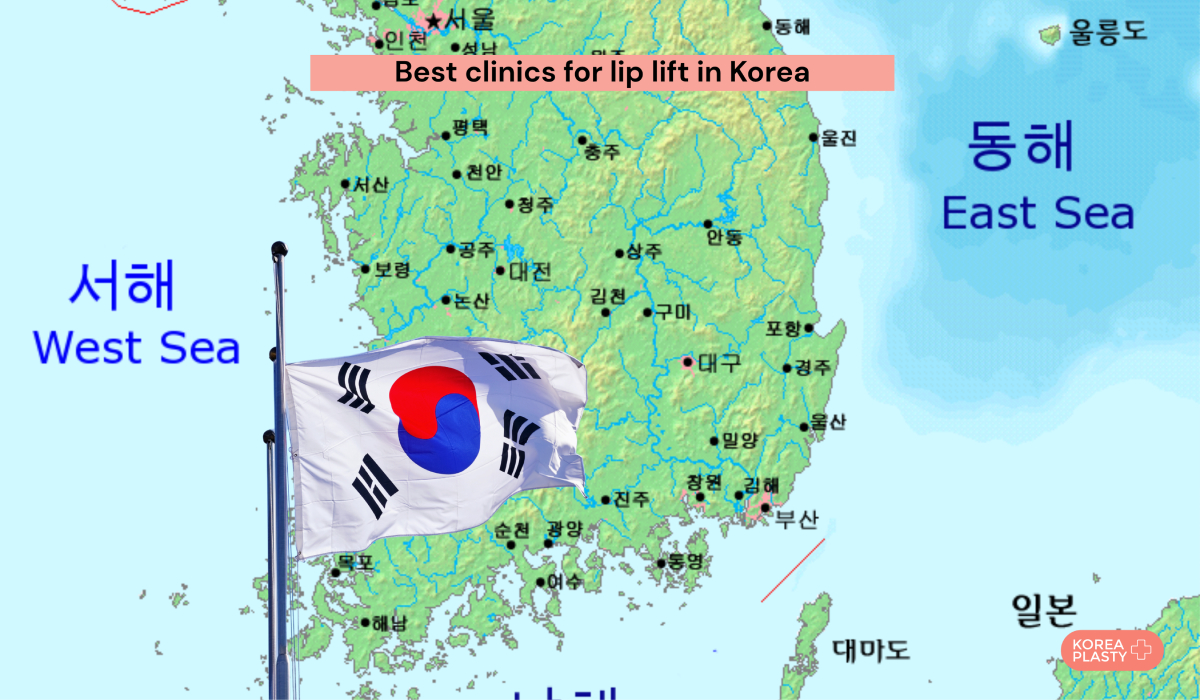
Seoul National University Bundang Hospital provides lip lift overview information and is among the first options to examine. In Gangnam, Seoul, multiple specialized clinics offer this procedure: Gangnam CDU Plastic Surgery Clinic specializes in lip lift surgery and provides detailed consultation, planning, and recovery instructions. Haru Clinic in the heart of Gangnam is recognized as a premier destination for non-surgical aesthetic procedures, offering the minimally invasive Philtrum Shortening Lift and Bullhorn Lip Lift without scarring. Nana Plastic Surgery Hospital & Dermatology provides facial contouring and lip lift services.
THE PLUS Plastic Surgery, led by Dr. Jeong Jae-yong in the Garosu-gil area of Gangnam, stands out as a premier destination for advanced aesthetic procedures, specializing in facial contouring and rhinoplasty. Tak Plastic Surgery in Seocho, Seoul, is highly acclaimed for advanced plastic surgery procedures, with board-certified plastic surgeon Dr. Tak Seung Wan offering comprehensive post-operative care for lip lift patients and membership in multiple Korean plastic surgery associations. Me Clinic headquarters provides consultation with both USA & Korea board-certified plastic surgeons, performing multiple surgeries daily. Vincent’s Hospital, member of Korean Society of Anesthesiologists and Korean Society for Vein Anesthesia, provides upper lip lift, rhinoplasty, philtrum reduction, and revisional upper lip lift. Additional providers include Korea Regen Plastic Surgery, SAERO Plastic Surgery listed among best lip lift clinics, Geurim Clinic offering cheiloplasty and philtrum reduction surgery, and Misu Clinic.