
Mini Facelift: Method, Procedure, Recovery, Pros, Cons, Cost
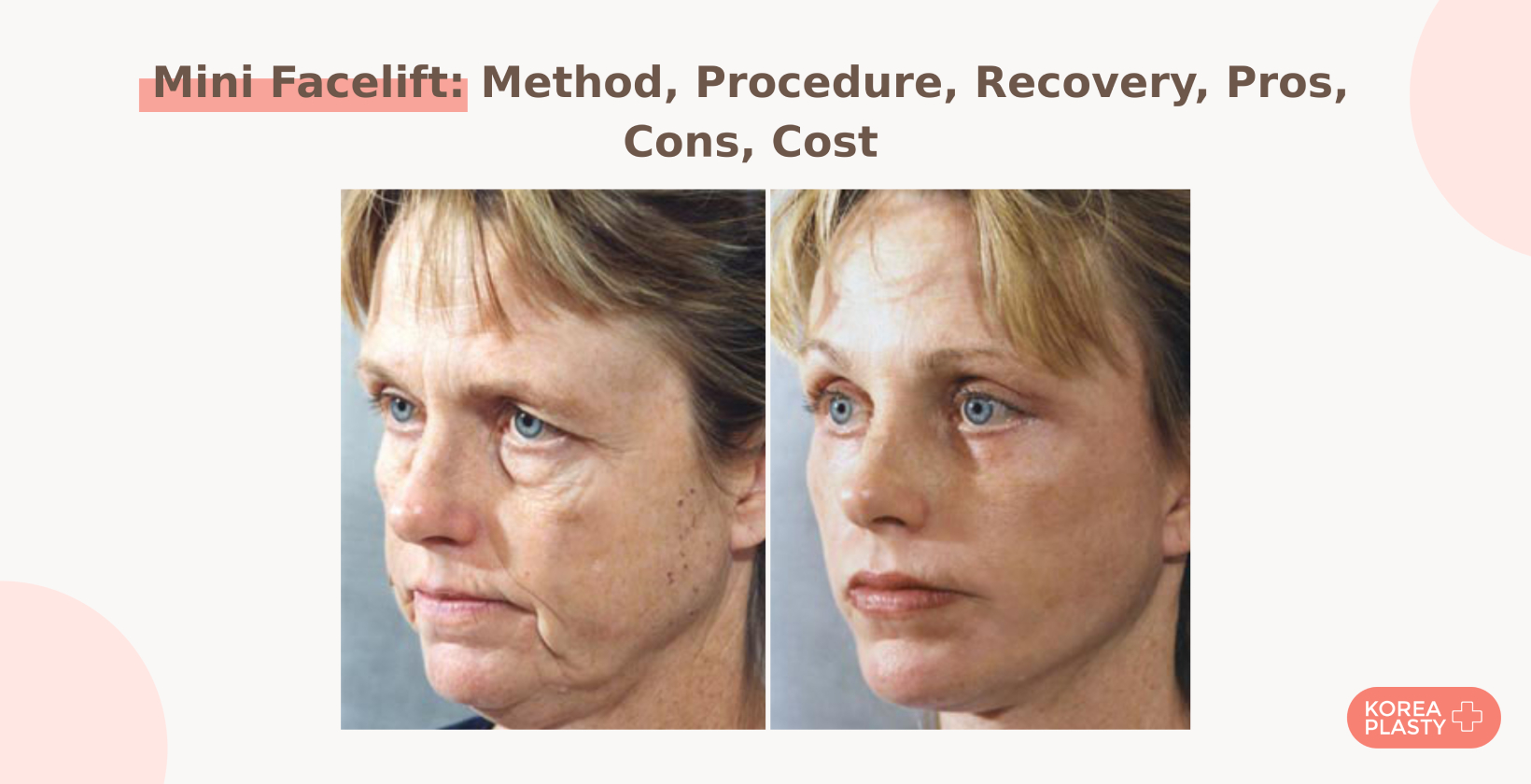
A mini facelift is a modified version of a full facelift that focuses on the lower face and jawline to address mild to moderate signs of facial aging. Because it uses shorter incisions and is less invasive than full facelift procedures, the mini lift involves shorter recovery times. Known also as the weekend lift or ponytail lift, this refined technique can deliver results that last up to 10 years while typically ranging from $3,500 to $6,500.
What is a mini facelift called?
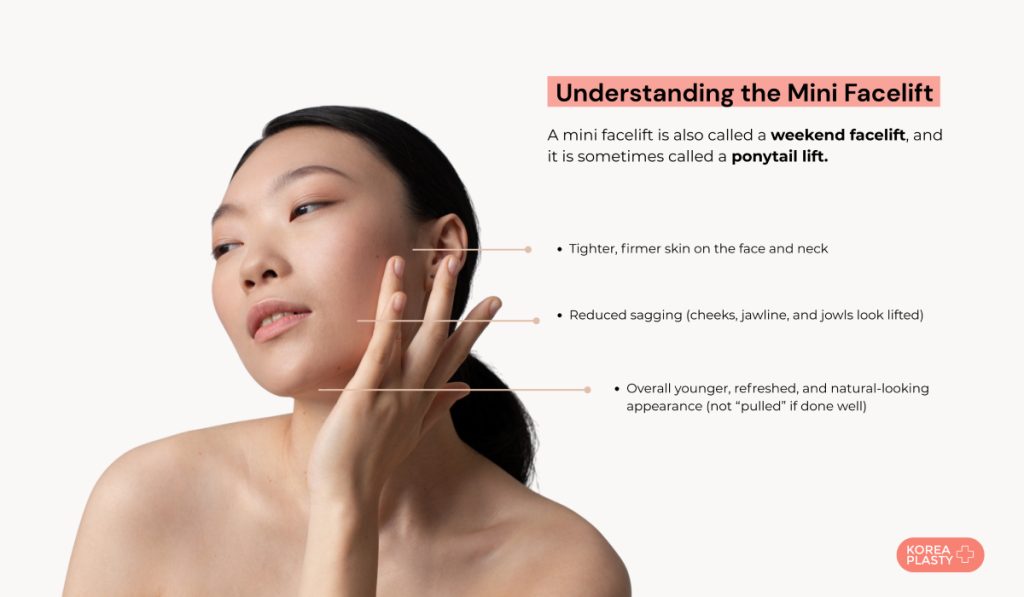
A mini facelift is also called a weekend facelift, and it is sometimes called a ponytail lift. It is a modified version of a full facelift, and the S-Lift is a type of mini facelift. This procedure avoids the downtime of more extensive facelift surgery, and it has the ability to address the first signs of aging and sagging skin.
A mini facelift is also called a short-scar facelift, a minimum incision facelift, or a limited incision facelift. It is sometimes referred to as a quick lift, lifestyle lift, or partial rhytidectomy.
What is the difference between a facelift and a mini facelift?
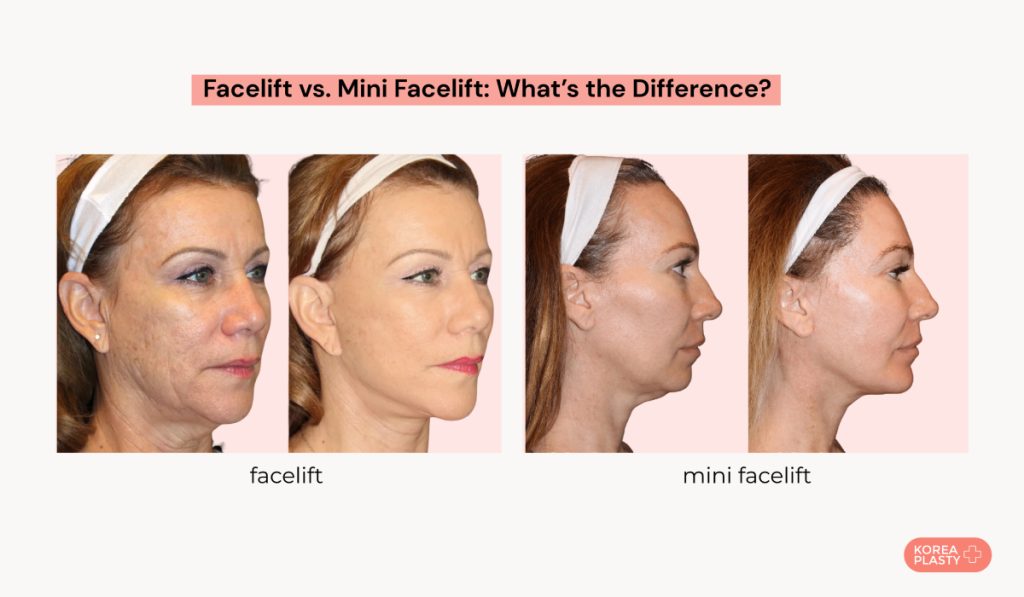
The difference between a facelift and a mini facelift is explained in the table below.
| Parameter | Facelift | Mini Facelift |
| Invasiveness | More invasive | Less invasive |
| Incisions | Longer incisions | Shorter incisions |
| Focus Area | Entire face from forehead to neck | Lower third of the face, jawline, jowls |
| Recovery Time | Longer recovery period | Faster recovery |
| Cost | Higher cost | Less expensive |
| Dramatic Results | More dramatic and long-lasting results | Less dramatic results |
| Neck Addressed | Yes | No |
| Mid-face Addressed | Yes | No |
| Forehead Addressed | Yes | No |
| Anesthesia | Typically general anesthesia | May involve local or general anesthesia |
| Targeted Issues | Deep wrinkles, jowling, neck laxity, jawline sagging | Mild to moderate skin laxity, sagging skin, jowling |
| Hospital Stay | May involve overnight stay | Usually no overnight stay |
| Incision Placement | Often go into hairline | Typically placed around the ears |
A mini facelift is a less invasive version of the full facelift. It uses shorter incisions, typically placed around the ears, produces smaller scars, and does not extend into the hairline. Because the surgery is less complicated, recovery is faster and the procedure costs less than a full facelift.
A full facelift is more invasive and technically demanding. It requires longer incisions that often reach from the top of the ears into the hairline and down to the neck. These longer incisions allow the surgeon to lift the mid-face, lower face, and neck in one session, so the results are more dramatic and longer-lasting. The trade-off is a longer recovery period and a higher price.
In short, the mini facelift targets only the lower third of the face and mild to moderate skin laxity, while the full facelift addresses the entire face from forehead to neck and delivers more comprehensive rejuvenation.
What is the difference between a neck lift vs a mini face lift?
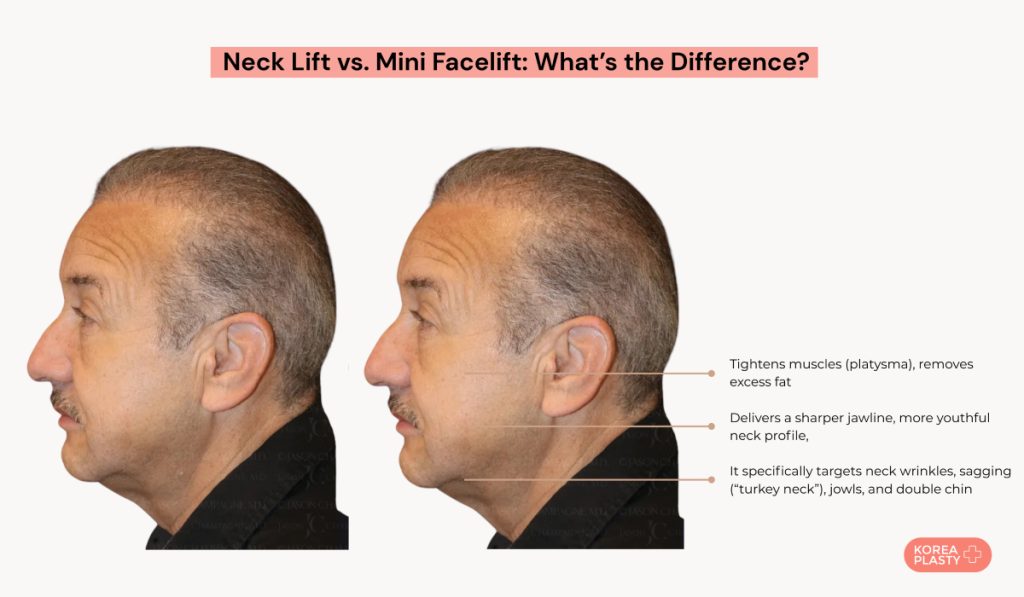
Differences between a neck lift and a mini face lift are explained in the table below.
| Parameter | Neck Lift | Mini Face Lift |
| Focus Area | Neck region only | Lower region includes jaw and jowls |
| Specific Target | Loose skin of neck | Face and neck |
| Effect on Cheeks | Neck lift does not do much for cheeks | Lifts and tightens the lower cheeks |
| Effect on Jowls | Neck lift does not do much for jowls | Reduces jowls and restores jawline |
| Skin Tightening | Tightens sagging neck skin | Tightens skin along the lower face and jawline |
| Muscle Repair | Neck lift repairs platysma muscle | Can involve limited SMAS tightening |
| Fat Removal | Neck lift removes excess fat around neck | Can remove small fat deposits around jowls and lower face |
| Wrinkle Smoothing | Neck lift smooths horizontal wrinkles and creases | Softens lower-face wrinkles |
| Jawline Definition | More defined jawline | Enhance jawline contour and definition |
| Invasiveness | Less invasive | Less invasive than a full facelift |
| Ideal For | Full-neck contouring | Early facial sagging, mild jowls, and lower-face laxity |
| Longevity of Results | Neck lifts provide dramatic, long-term results | Moderate results lasting several years |
| Combination with Other Procedures | Mini facelift is frequently combined with a neck lift | Combined with a neck lift |
| Alternative Names | Neck lift is also known as platysmaplasty | Also known as a short-scar facelift or mini-lift |
| Rejuvenation Goal | Neck lift aim to rejuvenate appearance of neck | Facelift aim to rejuvenate appearance of the lower face and jawline |
| Comprehensive Approach | SMAS facelift includes neck lift | Mini facelift can complement or precede a neck lift |
A neck lift focuses on the neck while a mini facelift focuses on the face; a neck lift tightens the neck’s loose skin, removes excess fat, and smooths horizontal wrinkles and creases, while a mini facelift does not do much for the neck.
Because a neck lift explicitly targets excess skin and muscles of the neck in this way, it results in a more defined jawline and youthful contour; it also repairs the platysma muscle and corrects turkey neck, yet does little for sagging cheeks, lower face, or jowls, where a facelift or mini facelift works, so different concerns dictate different procedures.
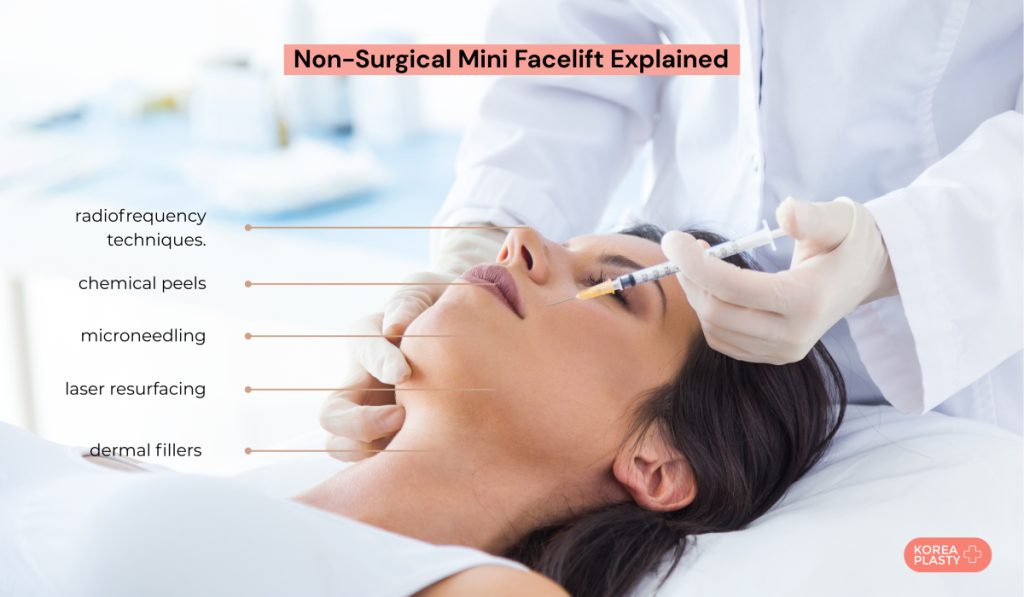
What is a non-surgical mini facelift?
A non-surgical mini facelift is a noninvasive or minimally invasive treatment to ameliorate the look of your facial skin. It is a procedure to temporarily refresh, firm or plump the skin on your face. Non-surgical facelift uses a combination of minimally invasive and nonsurgical techniques:s dermal fillers, laser resurfacing, microneedling, chemical peels, and radiofrequency techniques. The treatment does not require large incisions, general anesthesia, or an overnight hospital stay. It is virtually painless, involves minimal downtime, and provides immediate results with little post-op discomfort. Non-surgical facelift helps achieve firmer, smoother, and younger-looking skin without surgery. It adds volume to your face, reduces the look of wrinkles and sagging skin. The procedure is customized to individual needs and desires and combines with complementary surgeries: brow lift, eyelid surgery, or lip lift. However, it cannot replace the dramatic, long-lasting results of a surgical facelift.
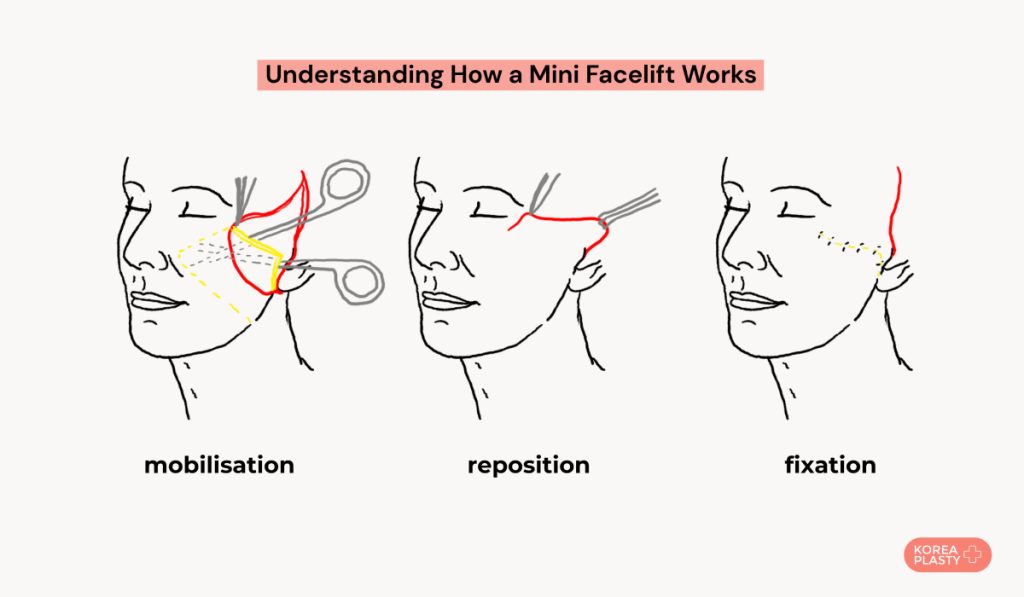
How does a mini face lift work?
A mini facelift is a surgery that addresses minor sagging in the lower half of the face. It begins with small incisions around the ears and hairline. These incisions are strategically concealed in natural creases or along the hairline to minimize visible scarring. The surgeon removes excess fat from the nasolabial fold, jowl, and double chin region. The procedure includes lifting and repositioning tissues. Suture techniques lift the soft tissues into a more desirable position. The SMAS flap is folded, excised, or pulled toward the postauricular region to refine the jowl. The direction of SMAS pulling is 90 to the nasolabial fold. Excess skin and tissue will be removed or lifted up. The surgeon uses sutures to close incisions. The procedure is performed using local anesthesia, general anesthesia, or a combination of local anesthetic and twilight sedation.
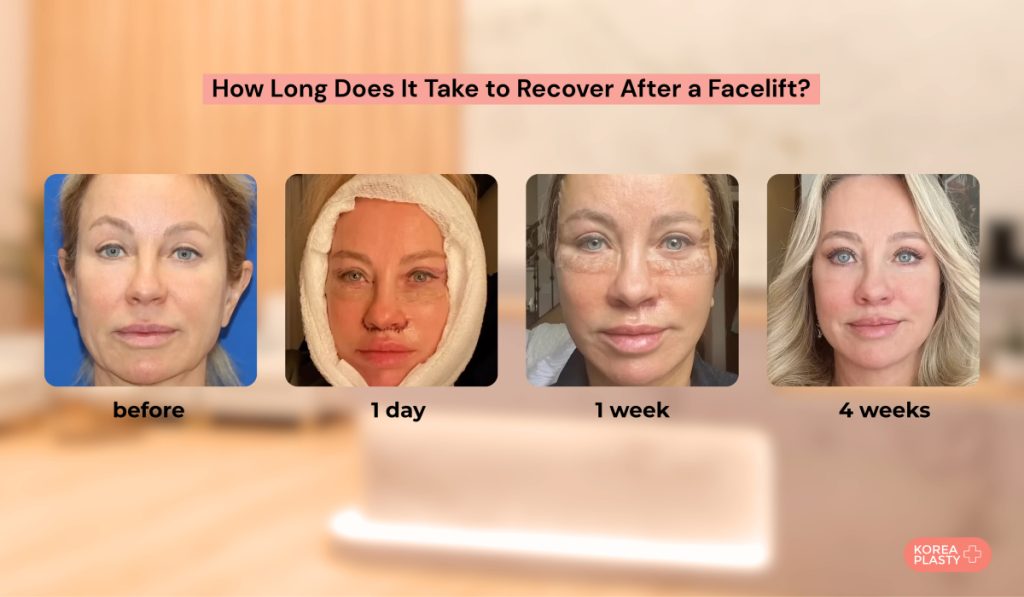
How long to recover from face lift?
Recovery from a mini facelift is brief. Most mini facelift patients return to work after five to seven days and resume normal routines within a month; patients see full benefits of mini facelift at 6 weeks.
Traditional facelift patients need 4-5 weeks to recover. Most patients return to work in two to three weeks after a full facelift and are ready to return to normal activities within 2 to 3 weeks. The majority of healing occurs in the first 2-4 weeks after surgery; swelling and bruising resolve within 2-4 weeks. Most patients have full healing around the 3-month mark.
Final results become evident over the next 6 to 12 months. Deep plane facelift recovery is described as a year-long journey, and full recovery takes six to twelve months.
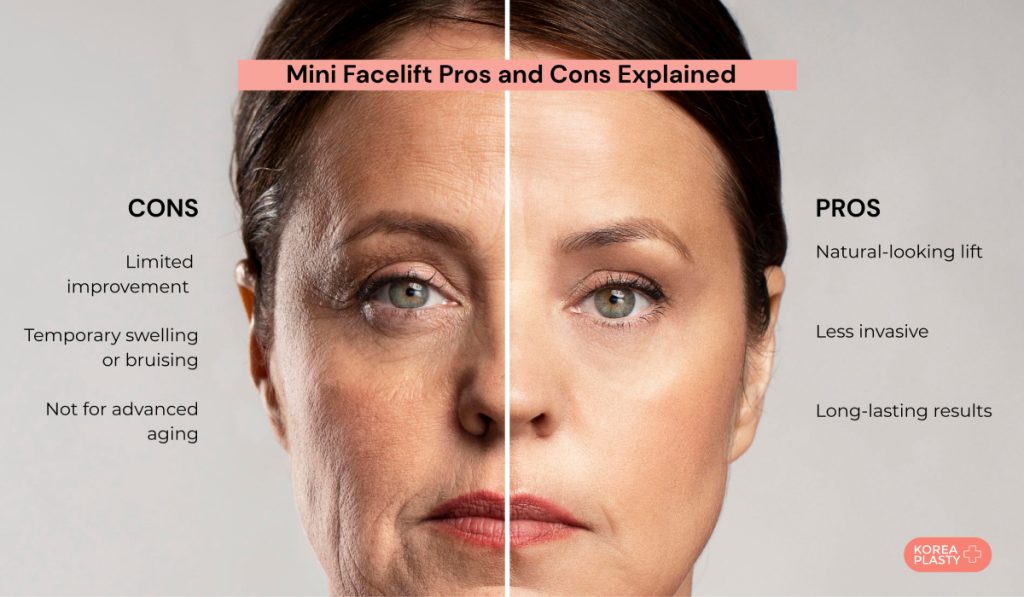
What are the pros and cons of a mini facelift?
The pros and cons of a mini facelift are outlined below
| Advantages/Benefits | Limitations/Risks |
| Mini facelift may refine overall facial appearance with natural looking results | Mini facelift may be unsuitable for patients seeking dramatic, long-lasting changes |
| Mini facelift benefits moderately loose skin | Mini facelift may cause mismatch when other facial regions remain aged |
| Mini facelift can provide faster recovery and minimal downtime | Mini facelift carries many of the same risks as a traditional full facelift |
| Mini facelift may not be perfect for people with severe skin laxity | Mini facelift does not treat severe sagging skin or deep wrinkles |
| Mini facelift helps look fresher and more youthful while still looking like yourself | Mini facelift may get better jawline and jowls but not midface or neck |
| Mini facelift gives considerable lift effect to the jowls | Mini facelift carries risk of nerve damage or numbness |
| Mini facelift provides brief enhancement of skin firmness | Mini facelift may not give total rejuvenation for severe aging signs, thus mini facelift results may be less dramatic than full facelift |
| Mini facelift may get better emotional well-being | Mini facelift carries risk of infection at the incision sites |
| Mini facelift results are more subtle | Mini facelift may cause scars, also carries risk of hematoma or seroma |
| Mini facelift results in scars that are 40% less scarring | Mini facelift may not address the midface and cheeks; not good for deep wrinkles |
| Mini facelift involves scar positioned in hairline and around ears | Mini facelift risks bleeding |
| Mini facelift has cost of the surgery | |
| Mini facelift may involve pain medication |
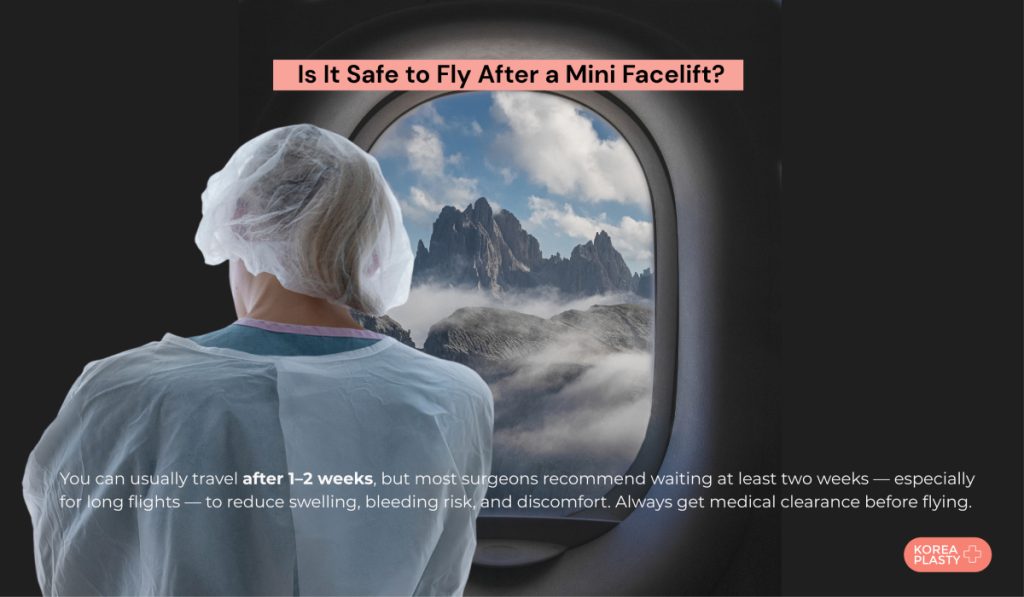
Can you fly after a mini facelift?
Mini facelift recovery allows travel within a week, yet most plastic surgeons recommend waiting at least two weeks before flying after plastic surgery. Short-haul flights are often feasible within five to ten days following the procedure, while long-haul trips are delayed for four weeks to allow swelling and bruising to subside.
Post-surgery air travel increases risks like swelling, discomfort, and deep vein thrombosis due to cabin pressure and limited mobility; airplane cabin pressure changes also reopen bleeding vessels that were sealed during surgery. Patients must obtain medical clearance from their surgeon before booking flights and stay well hydrated, stretch whenever possible on the plane, and avoid heavy lifting during flight to decrease the chance of unwanted side effects.
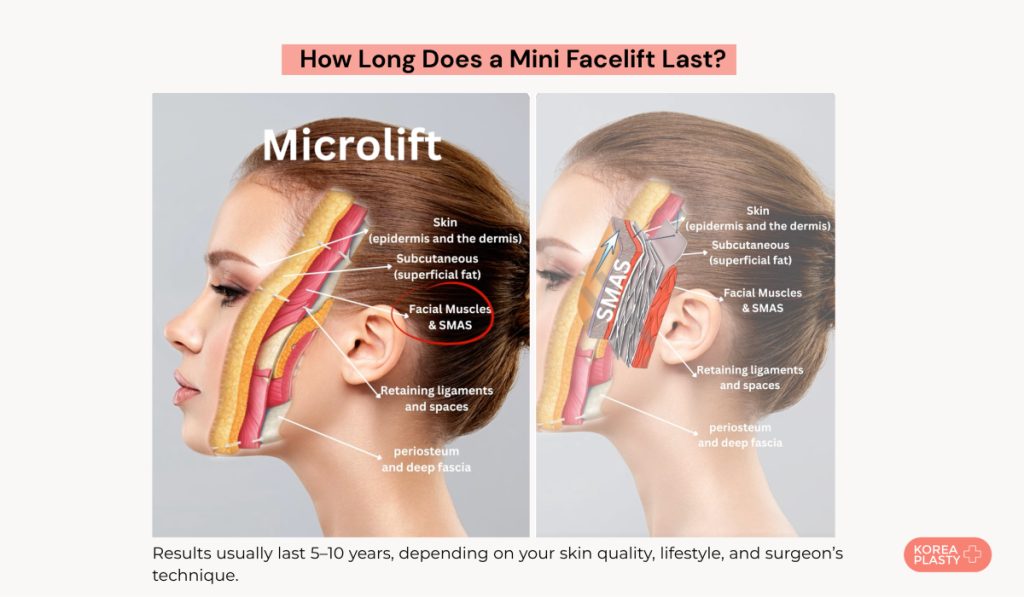
Is a mini facelift permanent?
A mini facelift is not a permanent solution; the skin on your face continues to age after the procedure. Results typically last five to ten years, although this range varies significantly based on individual factors: skin quality, lifestyle, skincare routine, amount of frowning, and overall condition. Choosing the right surgeon, receiving care during healing, and using non-traumatic surgical techniques that include SMAS fixation increase longevity, yet gravity and daily facial muscle use still act against stability. Maintaining a healthy lifestyle, applying sun protection, and avoiding smoking helps extend the refreshed look, but eventually another lift or alternate procedure will be desired.
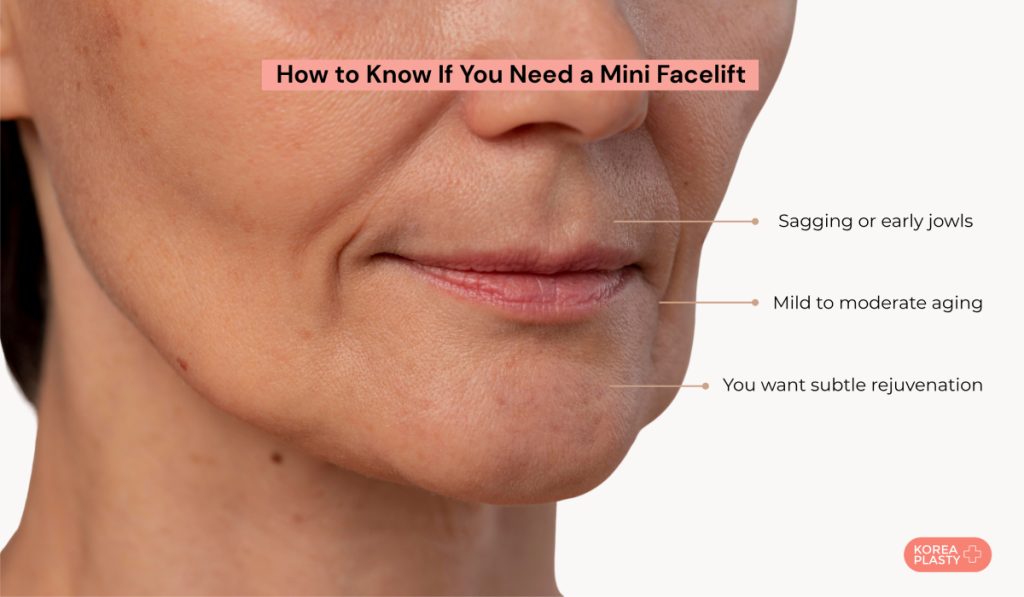
Do I need a mini facelift?
If you notice mild to moderate sagging in the lower face, early jowls, or a softening jawline, a mini facelift restores a natural-looking contour with shorter incisions and limited downtime. Ideal candidates are usually individuals in their 40s to 50s, yet men and women of any age are treated as long as signs of aging remain mild to moderate. The procedure is best suited for those seeking subtle, natural-looking enhancement rather than dramatic change, and it delays the need for more extensive surgery in the future.
A consultation with a qualified plastic surgeon determines whether a mini facelift addresses your facial rejuvenation needs. During this meeting, skin laxity, bone structure, and personal goals are evaluated; if severe skin laxity or deep wrinkles are present, a different procedure is recommended. Patients maintain realistic expectations, understand that the operation does not halt ongoing aging, and commit to diligent skin care to extend the refreshed result.
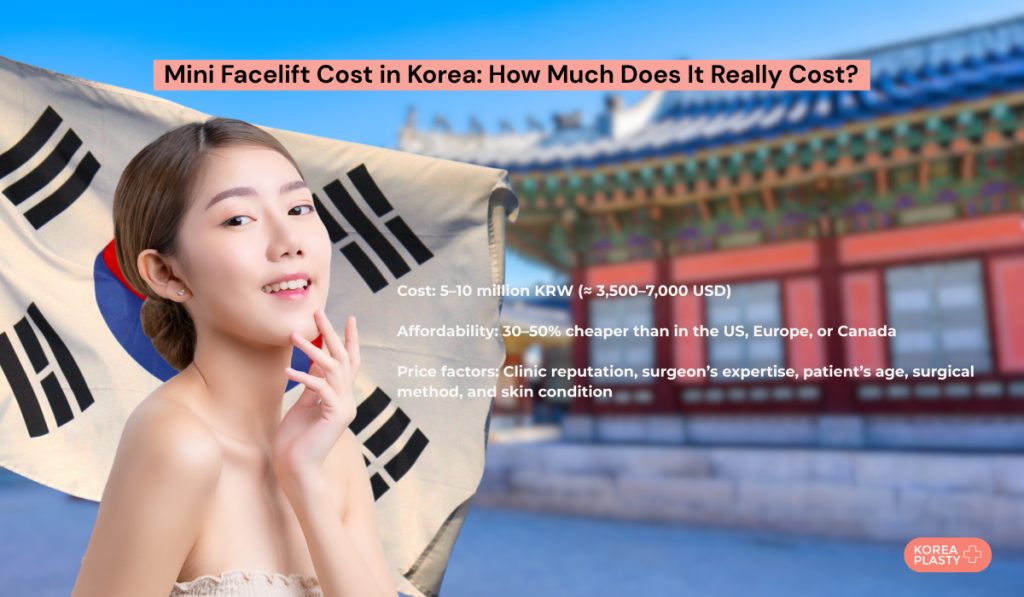
How much does a mini facelift cost in Korea?
Mini facelift surgery in Korea typically costs between 5 million and 10 million KRW, approximately 3,500 to 7,000 USD. Facelift surgery in Korea is 30-50% more affordable than in the United States, Europe, Canada and Western countries. Mini facelift price varies depending on clinic, expertise of the surgeon, patient’s age, surgical method, and skin quality. South Korean clinics usually include the surgeon’s fee, anesthesia, operating room charges, pre-op consultation, post-op medications, and follow-up visits in the price. Korean clinics include post-op care and hospital stay in the price.
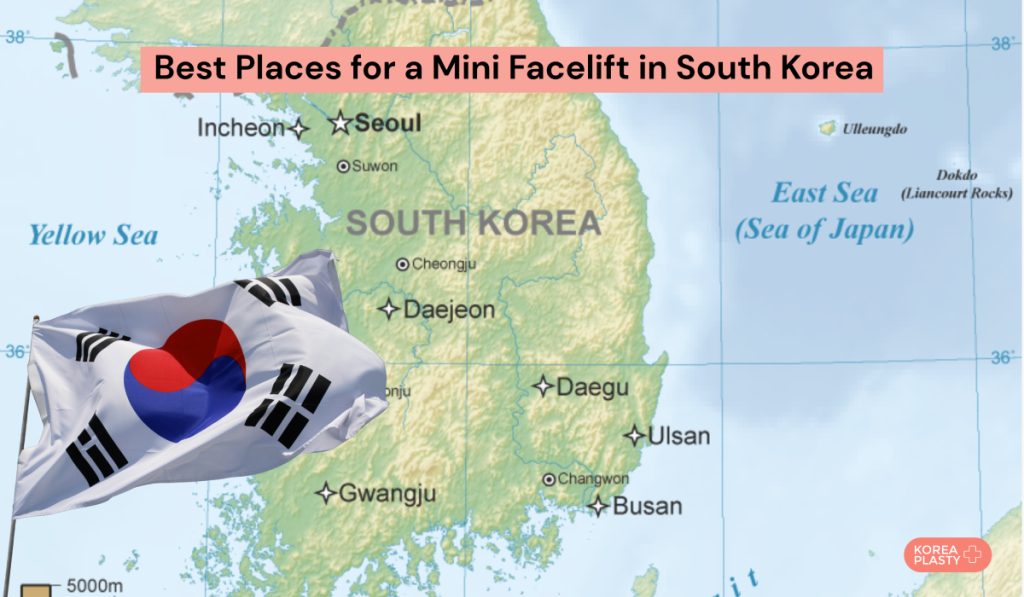
Where can I get a mini facelift in Korea?
Mini facelift is performed at clinics like ThePLUS, OKAY PLASTIC SURGERY, Nana Plastic Surgery, URBAN Plastic Surgery, V.LIF Plastic Surgery, Girin Plastic Surgery & Dermatology, VG Plastic Surgery, AB Plastic Surgery, JW Plastic Surgery Center, and ID Hospital. These centers sit in Seoul, mostly inside the Gangnam district.
The country draws roughly 8,000 foreign patients each year to URBAN Plastic Surgery alone. Teams led by board-certified surgeons:Dr. Tak Seung Wan and Dr. Lee Jeong Min, permanent member of the Korean Society of Aesthetic Plastic Surgery, deliver world-class expertise, advanced surgical techniques, and highly competitive pricing. South Korea is recognized as the #1 destination for cosmetic surgery; therefore, patients seeking mini facelift surgery can expect safe, refined, and affordable care at any of the listed clinics.